Babel Bubble was made in 5 days for Global Game Jam 2025 with a team of 8. I wanted to build a platformer where the level itself was the teacher. No tutorials due to scope restrictions, just a single vertical tower where every floor introduces a mechanic and forces you to practice it before moving on. The final goal was a short game that still delivers a genuine sense of mastery by the time you reach the top.
The game is inspired by "Getting Over it".
I served as Game Designer on a multidisciplinary team of 8 working remotely over 5 days:
The tower structure was the core level design decision. Each floor wraps around the exterior, so the player is always climbing and always visible against the backdrop of how far they've come.
There's no game over. Failing a jump drops you to the floors below, and enemy hits push you back rather than killing you. This was a deliberate pacing decision in a 5-minute game, a death screen kills momentum. Falling back means you're replaying sections you've already learned, which reinforces mastery rather than punishing failure.
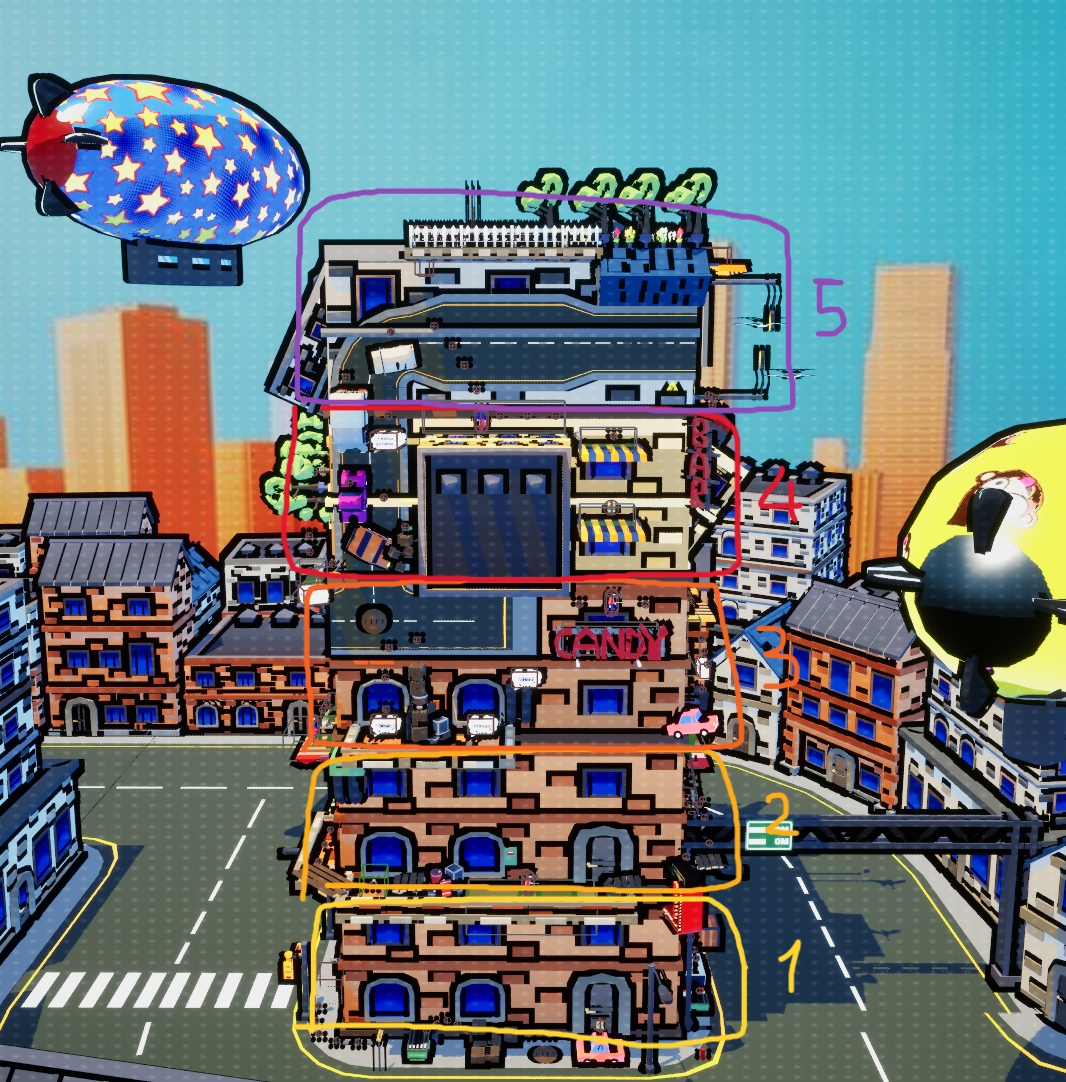
Floor 1 introduces jumping and the sturdy speech bubble (platforms).
Floor 2 adds enemies and the spiky bubble (combat).
Floor 3 ramps up with precision jumps and freefall sections.
Floor 4 shifts the world perspective to disorient the player.
Floor 5 demands mastery precise jumps with no new mechanics, just execution.
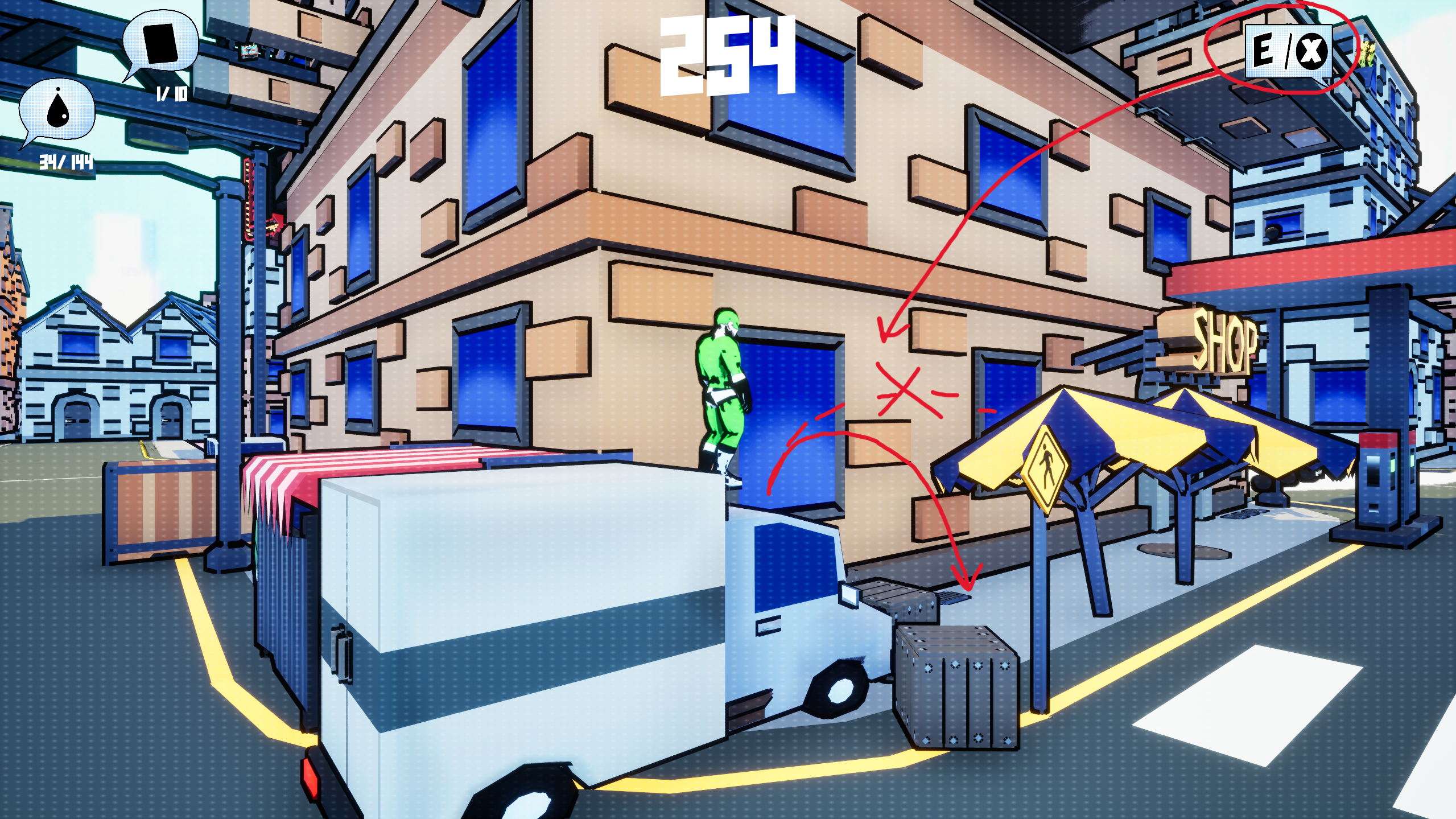
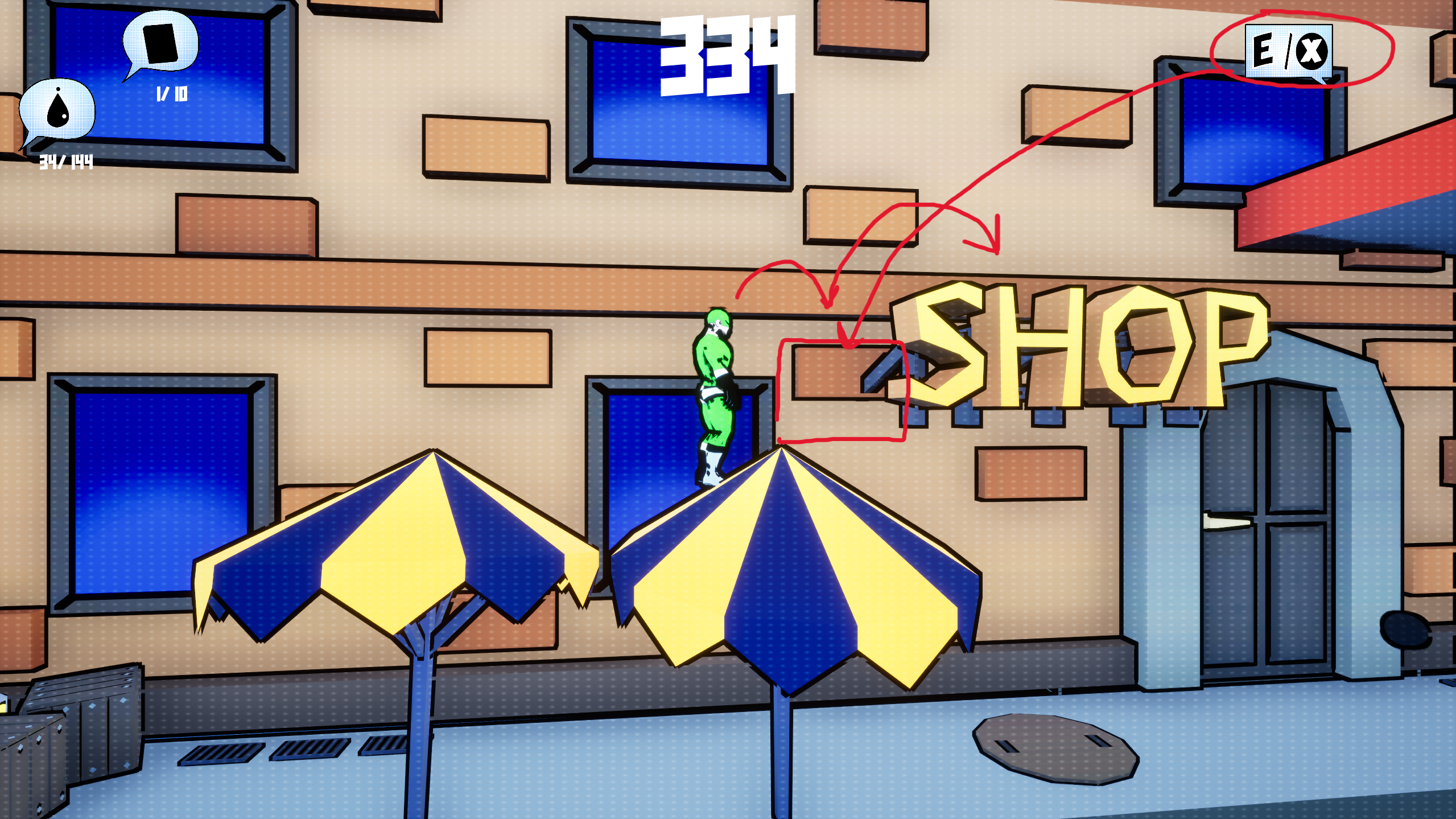
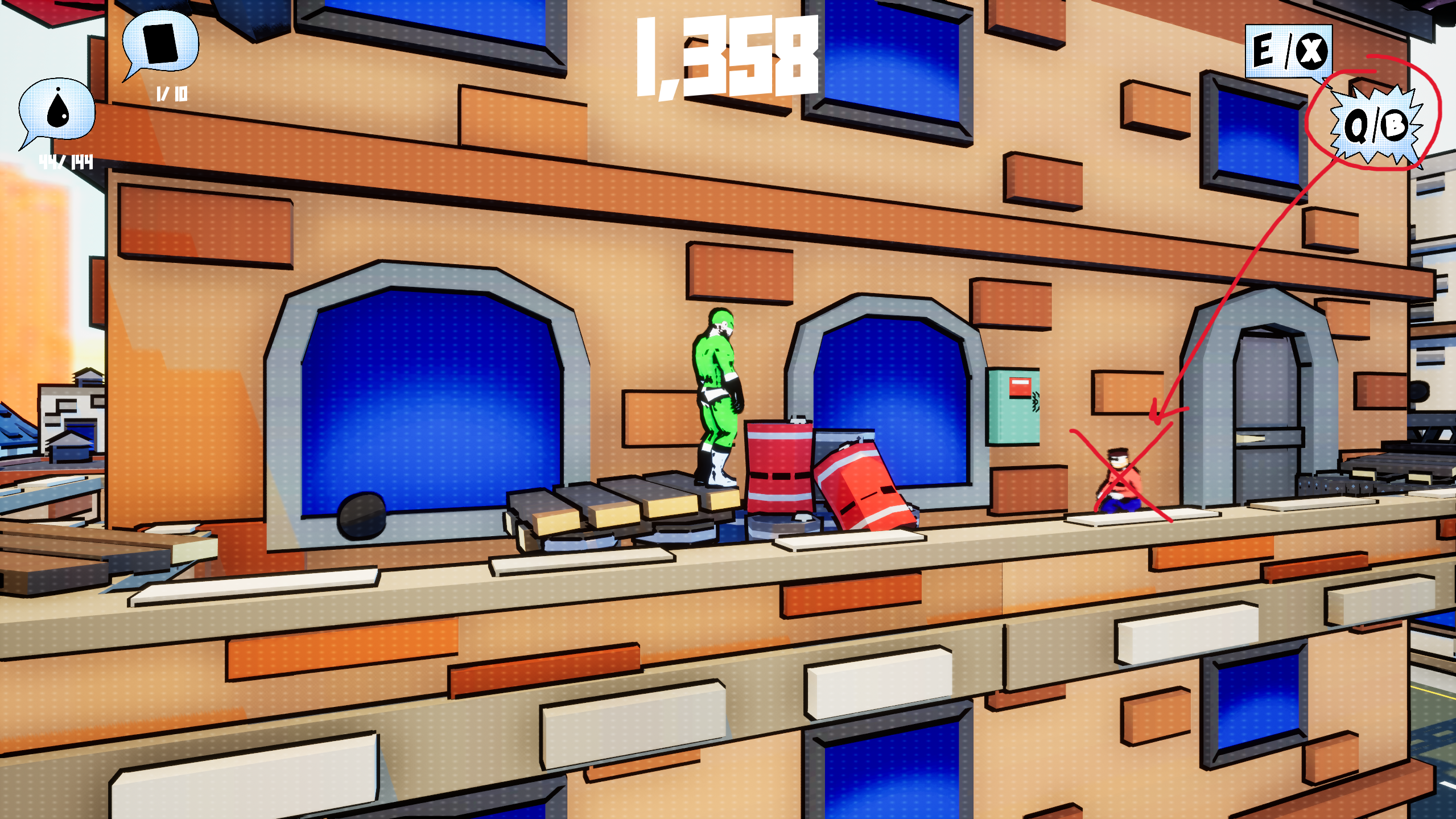
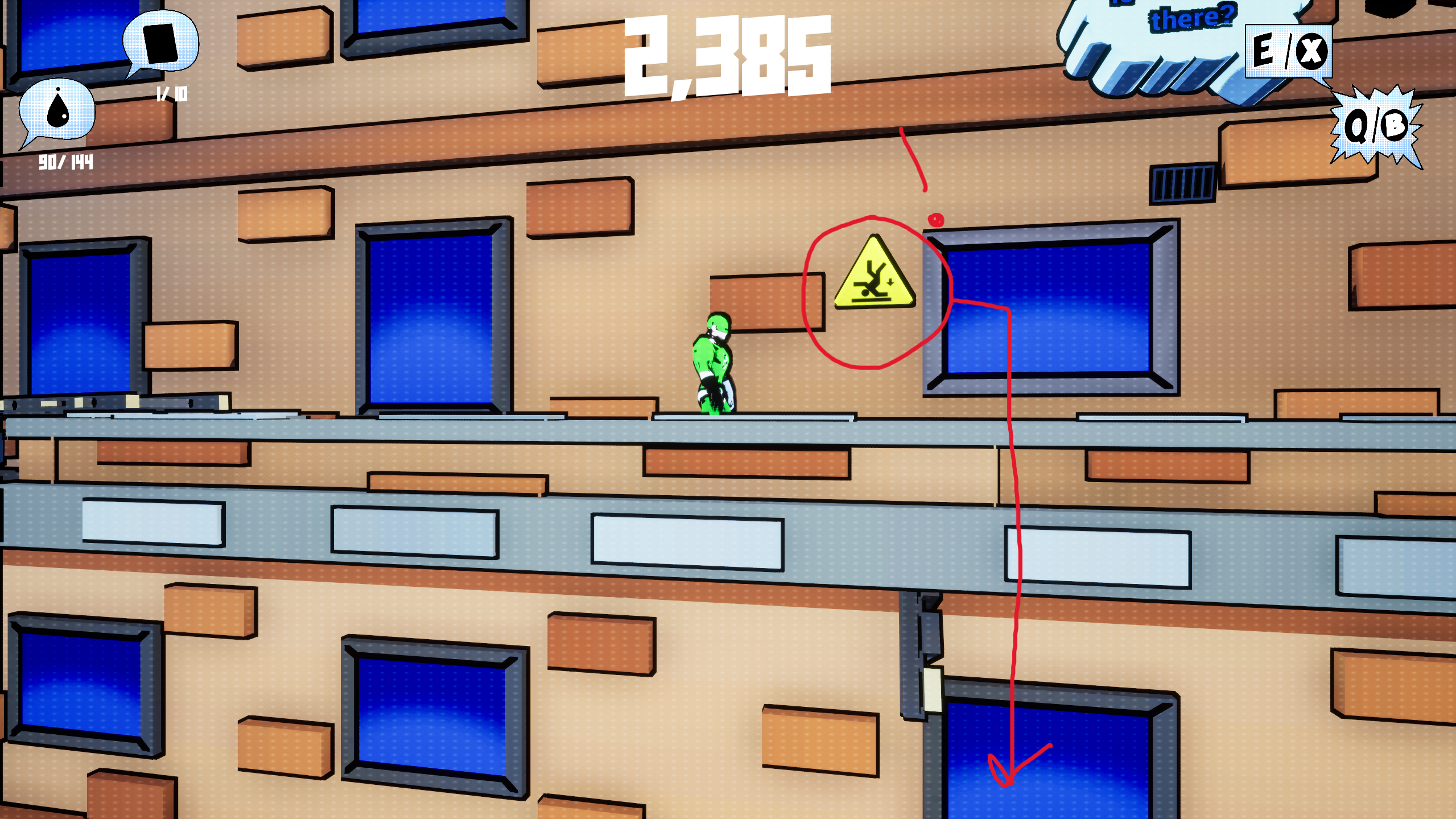
The no-game-over design kept the energy up. Playtesters who fell back to earlier floors reported feeling motivated to climb again rather than frustrated, because they they built mastery and repetition felt like practice, not punishment. Even though some of the falls were too harsh and led to frustration.
Scoping to one continuous level with a clear vertical metaphor (climb the tower, escape the comic) gave the whole team a shared vision and a solid cohesiveness to the game.
Floor 4's perspective shift was the most ambitious idea but it was rushed. Some players found it disorienting in a fun way, others just found it confusing not understanding where to jump. With more time, I'd playtest that floor in isolation before integrating it.
The five-day remote collaboration was intense, and the size of the team proved to be a challenge, as did the varying availability of its members. I would keep the team smaller, ensuring that everyone’s availability is aligned, as well as creating a space where we can work together.